Can Silk Pillowcases Really Improve Acne? Expert Analysis
Can Silk Pillowcases Really Improve Acne? Expert Analysis Acne affects over 85% of teenagers and half of adults worldwide. With […]
Read MoreFor many customers, the word “silk” already sounds luxurious. But for brands, retailers, and B2B buyers, simply saying “silk” is not enough. The real question is: what kind of silk is it, how is it made, and will the final product meet your customer’s expectations?
Mulberry silk is one of the most recognized materials in the luxury bedding, beauty, and sleepwear markets. It is widely used for silk pillowcases, eye masks, bonnets, scrunchies, bedding, sleepwear, and gift sets. Many brands choose it because it has a smooth touch, refined luster, and strong premium positioning.
However, not every product labeled “mulberry silk” offers the same quality. In production, the final result depends on fiber quality, momme weight, weaving, dyeing, sewing, finishing, packaging, and inspection.
As an export manager working with silk products for international brands, I often see buyers compare prices before they fully understand the material. This article explains what makes mulberry silk different, why it matters for B2B sourcing, and what buyers should check before placing an order.
What Is Mulberry Silk?
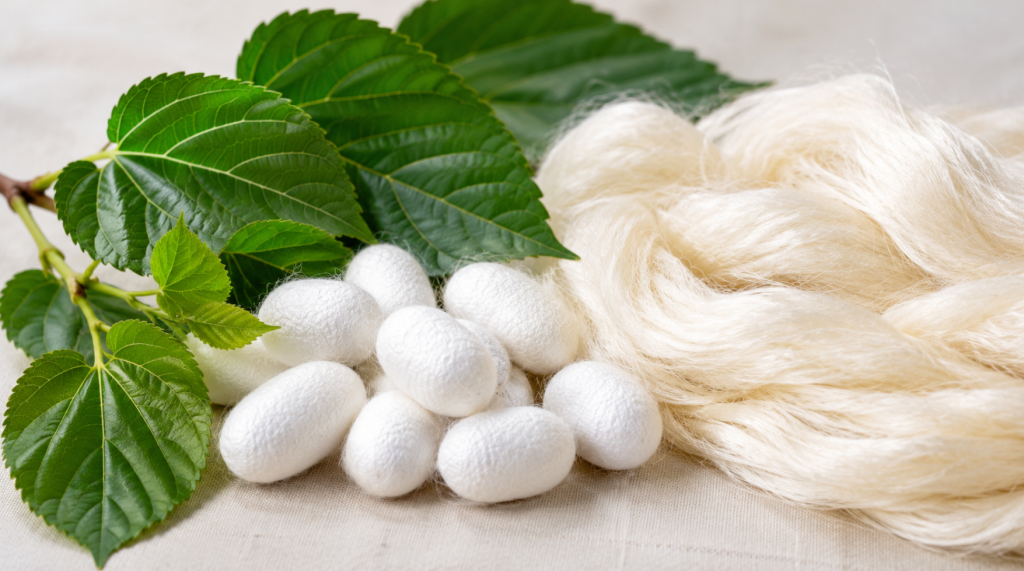
Mulberry silk is produced by Bombyx mori silkworms, which are mainly fed with mulberry leaves. Because the silkworms are raised in a controlled environment and eat a consistent diet, the silk filaments they produce are usually fine, long, smooth, and uniform.
This makes mulberry silk especially suitable for products that touch the skin and hair. A well-made mulberry silk pillowcase or bonnet has a soft, smooth surface that feels gentle and refined. This is why the material is popular with beauty brands, luxury bedding companies, and sleep-focused lifestyle brands.
When a product is described as 100% mulberry silk, the fabric should be made entirely from mulberry silk fibers. This is different from polyester satin, blended fabrics, or synthetic materials with a shiny surface.
For brands, this distinction is important. Customers may not understand the technical details at first, but they can usually feel the difference when they touch the product.
Mulberry Silk Is Different Because of the Fiber Quality
The first difference comes from the silk fiber itself.
Mulberry silk is known for its long and continuous filament. Longer fibers can create smoother yarn and a more even fabric surface. This is one reason high-quality mulberry silk feels soft, clean, and less rough than many lower-grade silk materials.
For finished products, fiber quality affects more than touch. It can influence fabric appearance, durability, dyeing consistency, and how premium the product feels after sewing and finishing.
In manufacturing, we can often see the difference when cutting and sewing the fabric. Better silk fabric lays more smoothly on the cutting table, has a more refined surface, and gives the finished product a cleaner appearance. Lower-quality silk may show more uneven texture, slubs, or color inconsistency.
For a luxury brand, these small differences matter. A customer buying a premium silk pillowcase or eye mask expects the product to feel elegant immediately after opening the box.
Mulberry Silk Has a Smooth and Refined Surface
One of the most visible differences of mulberry silk is its smooth surface and natural sheen. Unlike synthetic satin, which can look shiny in a slightly artificial way, mulberry silk usually has a softer and more refined luster.
This makes it suitable for premium product photography, gift packaging, and luxury retail presentation. A silk pillowcase in ivory, champagne, blush pink, silver grey, or navy can look simple but expensive when the fabric quality is good.
The smooth surface also makes mulberry silk popular in beauty and haircare categories. Many brands use silk pillowcases, bonnets, and scrunchies as part of a gentle hair and skin care routine. Buyers should still avoid exaggerated claims, but it is fair to say that the smooth surface creates less friction than many rougher fabrics.
For ecommerce brands, this is valuable because customers buy silk not only for function but also for feeling. The product needs to look beautiful in photos and feel beautiful in real use.
Mulberry Silk Is Different from Polyester Satin
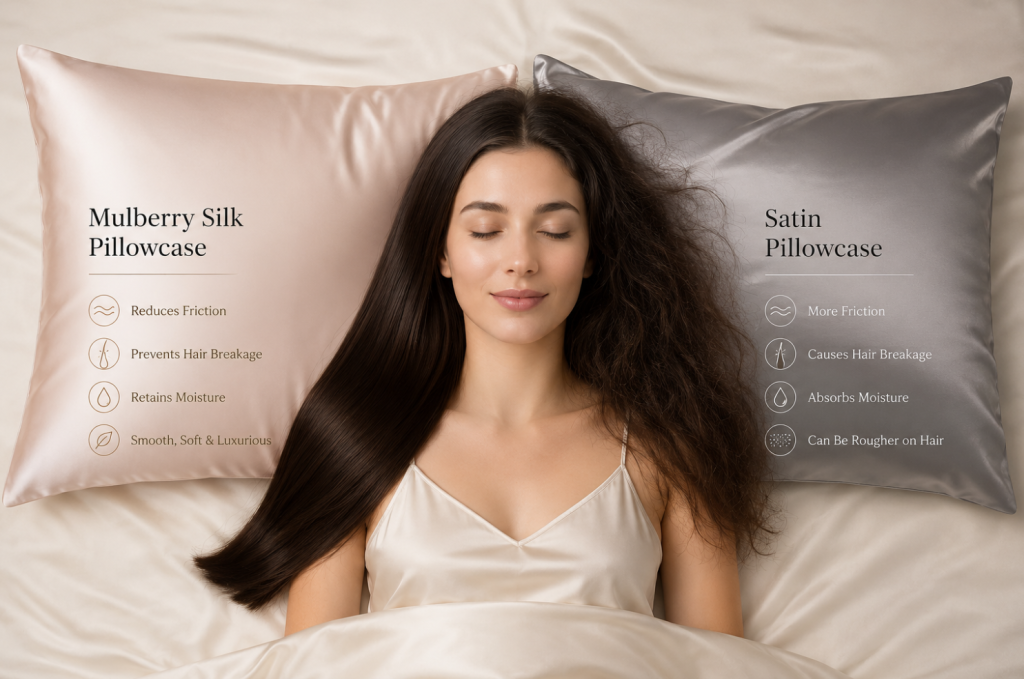
One common customer question is whether silk and satin are the same. They are not.
Silk is a natural fiber. Satin is a weave structure. A satin fabric can be made from silk, polyester, acetate, or other fibers. This means a polyester satin pillowcase may look shiny, but it is not a mulberry silk pillowcase.
This difference is important for B2B buyers because the price, labeling, customer expectation, and product positioning are completely different.
A polyester satin product may be suitable for a low-cost market, but it should not be marketed as real silk. For private label brands, inaccurate wording can lead to customer complaints and damage trust.
When sourcing, buyers should clearly confirm whether the fabric is 100% mulberry silk, silk blend, or polyester satin. The product page, care label, packaging, and marketing materials should all use accurate language.
Mulberry Silk Is Different from Wild Silk
Mulberry silk is also different from many types of wild silk, such as tussah silk. Wild silk can have a more textured hand feel and a less uniform appearance. It may be beautiful for certain fashion, decorative, or natural-style textile applications, but it is not usually the first choice for luxury silk pillowcases or beauty sleep products.
Mulberry silk is generally preferred when the buyer wants a smooth, soft, consistent, and refined finish. This makes it especially suitable for products where the customer expects a clean luxury feeling.
For brands selling to beauty, bedding, spa, boutique, or gift markets, mulberry silk is often easier to explain and easier to position. Customers recognize the term, and it fits naturally with premium sleep and self-care stories.
Momme Weight Makes a Big Difference
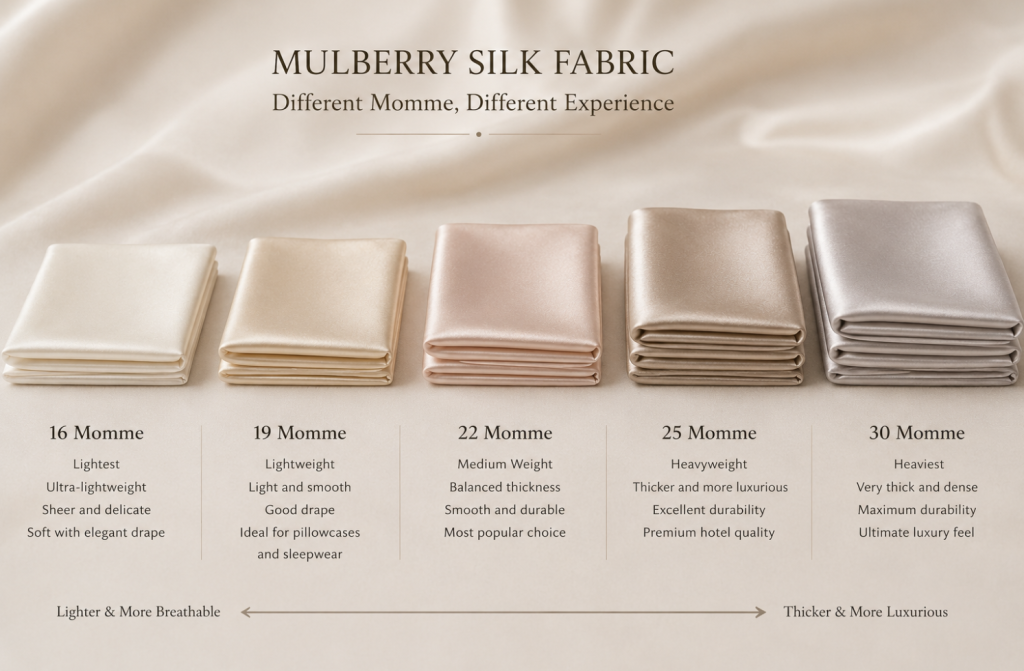
Another important reason mulberry silk products feel different is momme weight.
Momme, often written as “mm,” is used to measure silk fabric weight. In simple terms, a higher momme usually means the fabric is heavier and more substantial.
Common choices include:
16 momme: light, soft, and often used for eye masks, bonnets, and accessories.
19 momme: a common entry-level option for pillowcases and smaller silk products.
22 momme: a popular premium choice for silk pillowcases, beauty gift sets, and private label collections.
25 momme: heavier and more luxurious, often selected for premium bedding and higher-end pillowcases.
30 momme: very substantial and usually used for luxury bedding or high-end pillowcases.
However, higher momme is not always the best choice for every product. A 30 momme eye mask may feel too heavy for some customers, while a 16 momme pillowcase may feel too light for a luxury bedding brand. The best choice depends on the product type, target market, price point, and customer expectation.
For many beauty and ecommerce brands, 22 momme is a balanced option because it feels premium without making the product too expensive.
6A Grade Matters, But It Is Not the Whole Story
Many suppliers describe their silk as 6A mulberry silk. In the market, 6A usually refers to high-grade silk filament. It suggests the use of long, smooth, high-quality silk fibers.
For buyers, this is useful information, but it should not be the only quality standard. A product can use 6A silk fabric but still have problems in sewing, dyeing, labeling, or packaging.
For example, a 22 momme 6A mulberry silk pillowcase may still look low quality if the zipper is rough, the seams are uneven, the label is poorly attached, or the color does not match the approved sample.
A good sourcing decision should consider the whole finished product, not only the fabric description.
Manufacturing Details Change the Final Quality
One of the biggest differences between ordinary silk products and well-made silk products is manufacturing control.
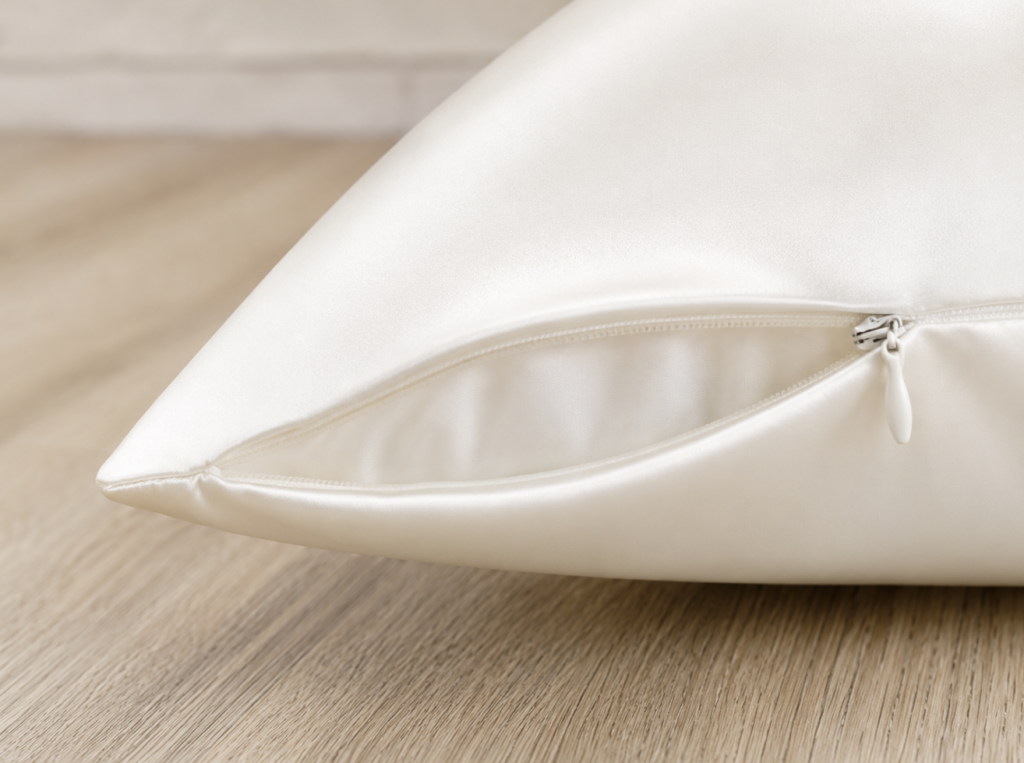
For silk pillowcases, buyers should check seam finishing, stitch density, zipper quality, envelope flap depth, size accuracy, and final pressing. A hidden zipper should move smoothly and should not scratch the skin. An envelope pillowcase should have enough fabric overlap so the pillow does not slip out easily.
For silk eye masks, the shape, filling, elastic band, nose area, and light-blocking structure all affect comfort. If the elastic is too tight, customers may feel pressure. If the inner structure is too thin, the mask may not block light well.
For silk bonnets, the cap depth, elastic softness, inner seam, and hair capacity matter. A bonnet for curly or high-volume hair needs a different shape from a regular bonnet. Simply increasing the diameter may not solve the problem if the cap depth is not suitable.
For silk scrunchies, the width, elastic strength, seam position, and fabric fullness influence both appearance and function.
These details are not always visible in a quotation sheet, but they strongly affect product reviews and repeat orders.
Dyeing and Color Consistency Are Important for Brands
Mulberry silk absorbs dye beautifully, but silk dyeing requires experience. Light colors such as ivory, champagne, blush pink, sage green, and silver grey need careful control because small color differences can be visible.
For private label brands, color consistency is especially important when selling matching sets. A pillowcase, eye mask, scrunchie, and bonnet should look like they belong to the same collection. If each item has a slightly different shade, the set may look unprofessional.
This is why buyers should approve lab dips or color samples before bulk production, especially for custom Pantone colors. For repeat orders, keeping color standards and production records also helps maintain consistency.
Printed silk products require additional attention. Digital prints need clear artwork, correct color management, and careful inspection after printing. For printed pillowcases or baby silk products, buyers should check both pattern placement and color fastness.
Certification Can Support Buyer Confidence
For many international brands, certification is part of the sourcing standard. OEKO-TEX STANDARD 100 is commonly requested for silk bedding, baby-related products, and beauty accessories because it relates to testing for harmful substances.
Certification can help brands build trust, especially when selling to retail buyers or customers who care about product safety. However, buyers should confirm what the certificate actually covers. It may cover the fabric, dyeing process, or finished product, depending on the supplier and certificate scope.
A reliable supplier should be able to provide valid documents and explain how they match the product being ordered.
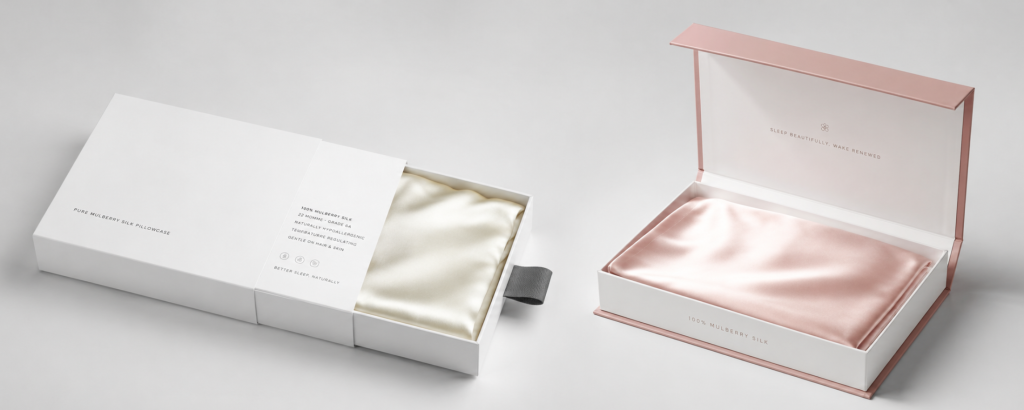
Mulberry Silk Supports Premium Packaging
Mulberry silk is naturally suitable for giftable products. The material already has a luxury feeling, so the packaging should match it.
A silk pillowcase in a thin plastic bag may be acceptable for some wholesale or basic ecommerce orders, but it may not support a premium brand image. For luxury beauty and bedding brands, packaging can include magnetic gift boxes, drawer boxes, printed tissue paper, logo stickers, silk drawstring bags, hang tags, woven labels, and care cards.
Packaging also affects shipping volume and cost. A beautiful gift box may increase product value, but it also changes carton size, weight, and freight cost. This is why packaging should be discussed early, not after the product is finished.
For retail buyers, barcode stickers, carton marks, and outer carton quality are also part of the order standard. Good packaging is not only about beauty. It is about brand presentation, protection, and delivery control.
How Buyers Should Choose the Right Mulberry Silk Product
The right silk product depends on the brand’s positioning.
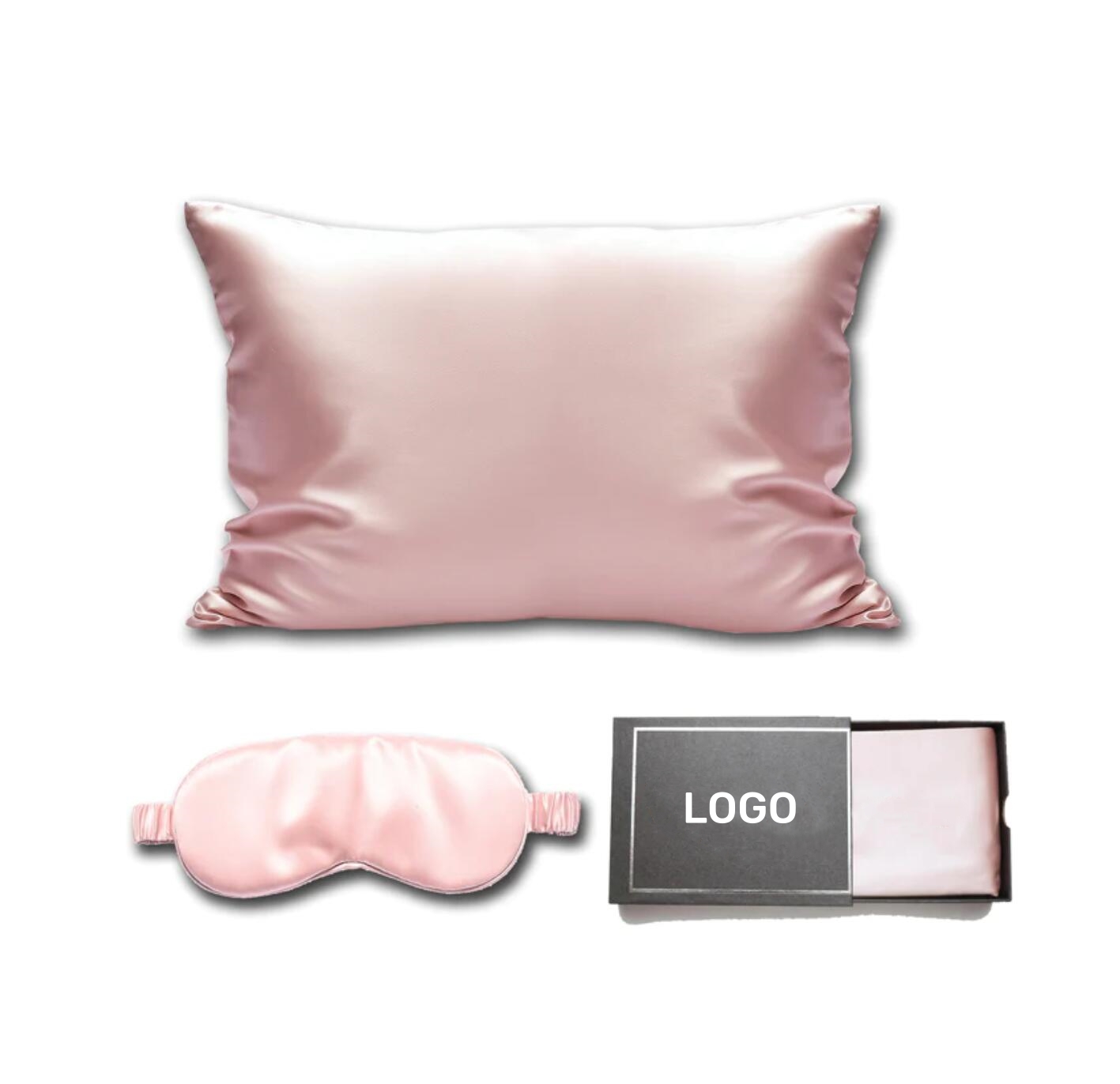
A beauty brand may focus on 22 momme silk pillowcases, eye masks, bonnets, and scrunchies in soft, elegant colors. The packaging may be designed for gifting and social media presentation.
A luxury bedding brand may prefer 25 momme or 30 momme silk pillowcases, sheets, and duvet covers. The focus may be on fabric weight, durability, size accuracy, and refined finishing.
An ecommerce starter brand may begin with 19 momme or 22 momme pillowcases in a limited color range. This allows the brand to test demand without carrying too many SKUs.
A boutique retailer may choose ready-to-gift silk sets with custom logo labels and small MOQ packaging options.
There is no single best specification for every buyer. The best choice is the one that matches the customer, sales channel, price point, and brand story.
Questions to Ask Before Sourcing Mulberry Silk
Before ordering, buyers should ask clear questions:
Is the fabric 100% mulberry silk?
What momme weight is used?
Is the silk 6A grade?
Is the fabric OEKO-TEX certified?
What weave is used?
Can you provide fabric swatches or lab dips?
What are the standard and custom size options?
Can you customize labels, hang tags, packaging, and gift boxes?
What is the MOQ for each color and design?
How do you inspect the finished products?
Can you provide pre-production samples before bulk order?
These questions help buyers compare suppliers more accurately. The cheapest price may not be the best value if it creates quality issues later.
Final Thoughts
Mulberry silk is different because of its fine fiber, smooth surface, refined luster, and strong connection with luxury sleep and beauty products. But for B2B buyers, the real difference is not only in the raw material. It is in the complete product development process.
Fabric weight, silk grade, weaving, dyeing, sewing, certification, packaging, and inspection all decide whether a silk product feels truly premium.
For private label brands, beauty companies, luxury bedding brands, ecommerce sellers, and retail buyers, understanding these details helps avoid mistakes and build better silk collections.
A well-made mulberry silk product should not only look beautiful in photos. It should feel good in the customer’s hands, perform well in daily use, and represent the brand with confidence.
FAQ
What makes mulberry silk different from regular silk?
Mulberry silk usually has longer, finer, and more uniform fibers because the silkworms are raised on a controlled diet of mulberry leaves. This helps create a smooth, soft, and refined fabric surface.
Is mulberry silk better than satin?
Mulberry silk and satin are not the same type of term. Silk is a natural fiber, while satin is a weave. Polyester satin may look shiny, but it is not real silk. Mulberry silk is usually positioned as a higher-end material.
Is 22 momme mulberry silk good for pillowcases?
Yes. 22 momme is a popular premium choice for silk pillowcases because it offers a good balance between softness, weight, durability, and price. Many beauty and private label brands choose 22 momme for giftable pillowcase sets.
Is 6A mulberry silk always high quality?
6A refers to high-grade silk filament, but buyers should also check fabric weight, dyeing quality, sewing, certification, and packaging. A good finished product depends on more than silk grade alone.
Why is mulberry silk popular for beauty products?
Mulberry silk has a smooth surface and soft hand feel, making it suitable for pillowcases, bonnets, eye masks, and scrunchies. These products fit naturally into haircare, skincare, and sleep routines.
Can mulberry silk products be customized for private label brands?
Yes. Most mulberry silk products can be customized by fabric weight, size, color, logo label, care label, hang tag, embroidery, printing, pouch, gift box, barcode sticker, and carton mark.
What should buyers check before placing a silk order?
Buyers should check fabric composition, momme weight, silk grade, certification, color standard, size, sewing quality, sample approval, packaging details, MOQ, lead time, and inspection process.
Can Silk Pillowcases Really Improve Acne? Expert Analysis Acne affects over 85% of teenagers and half of adults worldwide. With […]
Read More
Indulge in Luxury: The Allure of Silk Pajamas In a world filled with mass-produced sleepwear, silk pajamas stand as a […]
Read More
General people think that silk is satin, in fact, silk clothing and products as a unified mark of 100% silk, […]
Read More