Can Silk Pillowcases Really Improve Acne? Expert Analysis
Can Silk Pillowcases Really Improve Acne? Expert Analysis Acne affects over 85% of teenagers and half of adults worldwide. With […]
Read MoreMany people know silk as a luxurious fabric used in pillowcases, bedding, sleepwear, and accessories. However, one question we often hear from customers and brand owners is surprisingly simple:
What is silk actually made of?
As a silk manufacturer with more than 10 years of experience supplying private label brands, retailers, and luxury bedding companies, we’ve found that understanding the raw material behind silk helps buyers make better product decisions.
In this article, we’ll explain where silk comes from, how it is produced, what makes mulberry silk different, and why silk continues to be one of the most sought-after natural fibers in the world.
Silk Is a Natural Protein Fiber
Unlike polyester, nylon, or other synthetic fabrics, silk is a completely natural fiber.
Silk is produced by silkworms during their cocoon-spinning stage.
The fiber itself is primarily composed of two natural proteins:
Fibroin
Fibroin forms the structural center of the silk filament. It provides strength, durability, and the smooth texture that silk is known for.
Sericin
Sericin is a natural protein coating that surrounds the fibroin fibers inside the cocoon. During silk processing, most sericin is removed to create the soft, smooth feel associated with finished silk fabric.
Together, these proteins create one of the strongest natural fibers found in nature.
Where Does Silk Come From?
Commercial silk production begins with silkworms.
The most common species used for silk production is:
Bombyx mori
This domesticated silkworm has been cultivated for thousands of years and feeds almost exclusively on mulberry leaves.
After several weeks of feeding, the silkworm begins spinning a protective cocoon.
What makes this process remarkable is that a single cocoon can contain a continuous silk filament measuring between 600 and 1,500 meters in length.
These filaments are later unwound and combined to create silk yarn.
What Is Mulberry Silk?
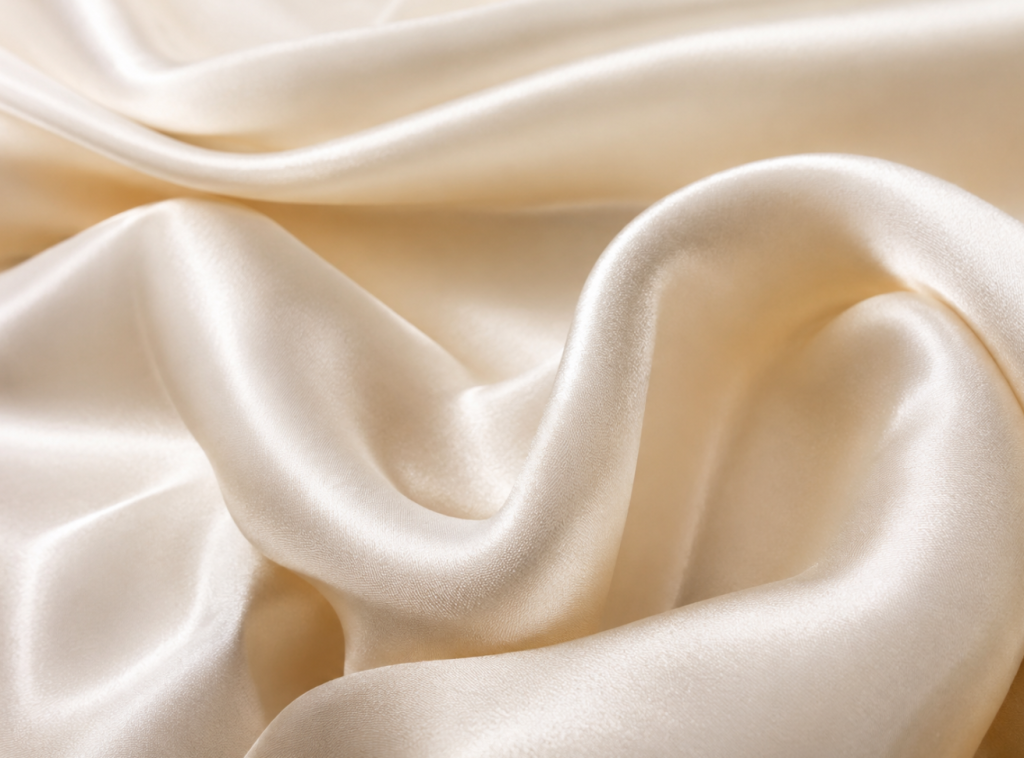
When discussing silk products, you will often hear the term mulberry silk.
Mulberry silk refers to silk produced by Bombyx mori silkworms that are fed a controlled diet of mulberry leaves.
This is considered the highest-quality silk available because it offers:
For this reason, premium silk pillowcases, bedding, eye masks, bonnets, and sleepwear are typically made from mulberry silk.
Many luxury brands specifically require 100% mulberry silk for their products.
How Silk Is Made: From Cocoon to Fabric
A Real Look Inside Silk Fabric Production
The video above shows part of the silk weaving process used in the production of premium mulberry silk fabrics. From yarn preparation to weaving and finishing, every stage plays an important role in creating the smooth texture, durability, and natural sheen that silk is known for.
Step 1: Cocoon Harvesting
After the silkworm completes its cocoon, the cocoons are carefully collected and sorted based on quality.
Step 2: Reeling
The cocoons are softened in warm water.
The silk filaments are then carefully unwound and combined to form raw silk yarn.
Step 3: Yarn Preparation
The silk yarn is twisted and prepared for weaving.
At this stage, consistency and yarn quality are carefully monitored.
Step 4: Weaving
The yarn is woven into silk fabric.
Different weaving methods can create different textures and appearances.
Examples include:
Step 5: Dyeing and Finishing
The fabric is dyed, finished, inspected, and prepared for manufacturing.
At this stage, quality control becomes extremely important because color consistency and fabric performance directly affect the final product.
Why Is Silk So Smooth?
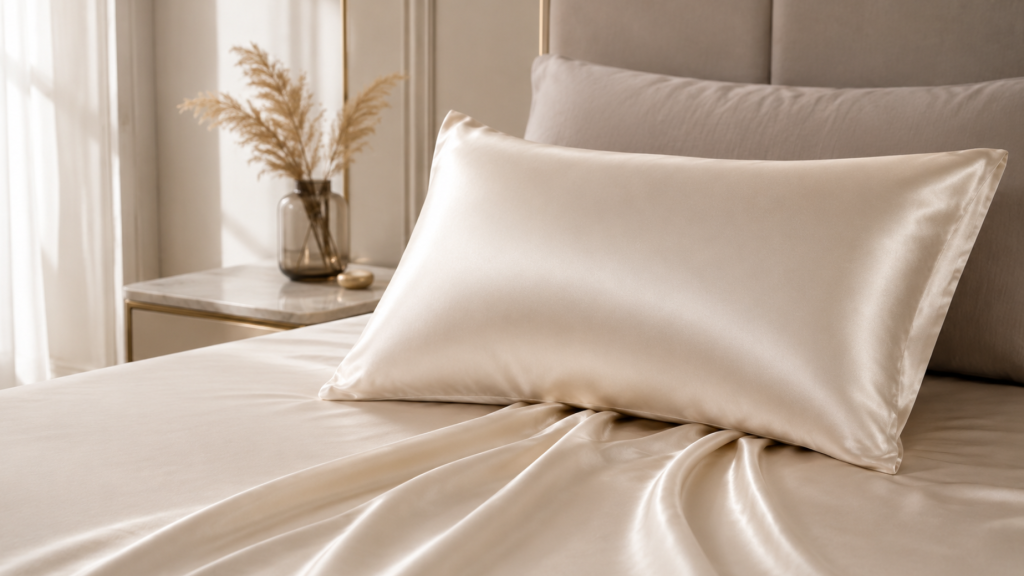
One of silk’s most famous characteristics is its smooth surface.
Unlike cotton fibers, which have shorter and more irregular structures, silk filaments are naturally long and uniform.
This helps reduce friction between the fabric and:
This low-friction surface is one reason silk pillowcases have become popular among beauty and wellness brands.
Is Silk Sustainable?
Many buyers today are interested in sustainability.
Because silk is a natural protein fiber, it is biodegradable under the right conditions.
Compared with petroleum-based synthetic fibers, silk comes from a renewable biological source.
However, sustainability can vary depending on farming practices, dyeing methods, and manufacturing processes.
For this reason, responsible sourcing remains an important consideration when selecting a silk supplier.
Why Buyers Should Understand Silk Materials
For private label brands and product developers, understanding silk materials helps when making decisions about:
For example, a beauty brand launching a silk pillowcase collection may choose 22 momme mulberry silk because it offers a balance of luxury feel and durability.
A luxury bedding brand may prioritize higher momme weights for enhanced longevity.
Understanding the raw material helps ensure that product expectations match customer expectations.
Common Misconceptions About Silk
Myth 1: All Silk Is the Same
Not all silk is identical.
Fiber quality, weaving method, momme weight, and finishing processes can all affect performance.
Myth 2: Silk Is Fragile
While silk feels delicate, high-quality mulberry silk is surprisingly durable when cared for properly.
Myth 3: Silk Is Only for Luxury Fashion
Today, silk is widely used in:
The market has expanded far beyond traditional apparel.
Frequently Asked Questions
Is silk a natural fiber?
Yes. Silk is a natural protein fiber produced by silkworms.
What is silk made of chemically?
Silk is primarily composed of the proteins fibroin and sericin.
Is mulberry silk real silk?
Yes. Mulberry silk is considered the highest-quality type of natural silk.
How is silk different from satin?
Silk refers to the fiber itself, while satin refers to a weaving structure. Satin can be made from silk, polyester, or other fibers.
Why is silk more expensive than other fabrics?
Silk production involves a complex and labor-intensive process, from cocoon cultivation to fabric weaving and finishing.
Final Thoughts
So, what is silk made of?
At its core, silk is a natural protein fiber created by silkworms and refined through a carefully controlled manufacturing process. Its unique combination of strength, softness, breathability, and natural sheen has made it one of the world’s most valued textiles for centuries.
Whether you’re developing a private label collection, sourcing premium bedding products, or simply exploring luxury textiles, understanding the origins of silk is the first step toward making informed product decisions.
Can Silk Pillowcases Really Improve Acne? Expert Analysis Acne affects over 85% of teenagers and half of adults worldwide. With […]
Read More
A silk bonnet is often described in simple terms as a nighttime accessory for protecting hair. In practice, however, the […]
Read More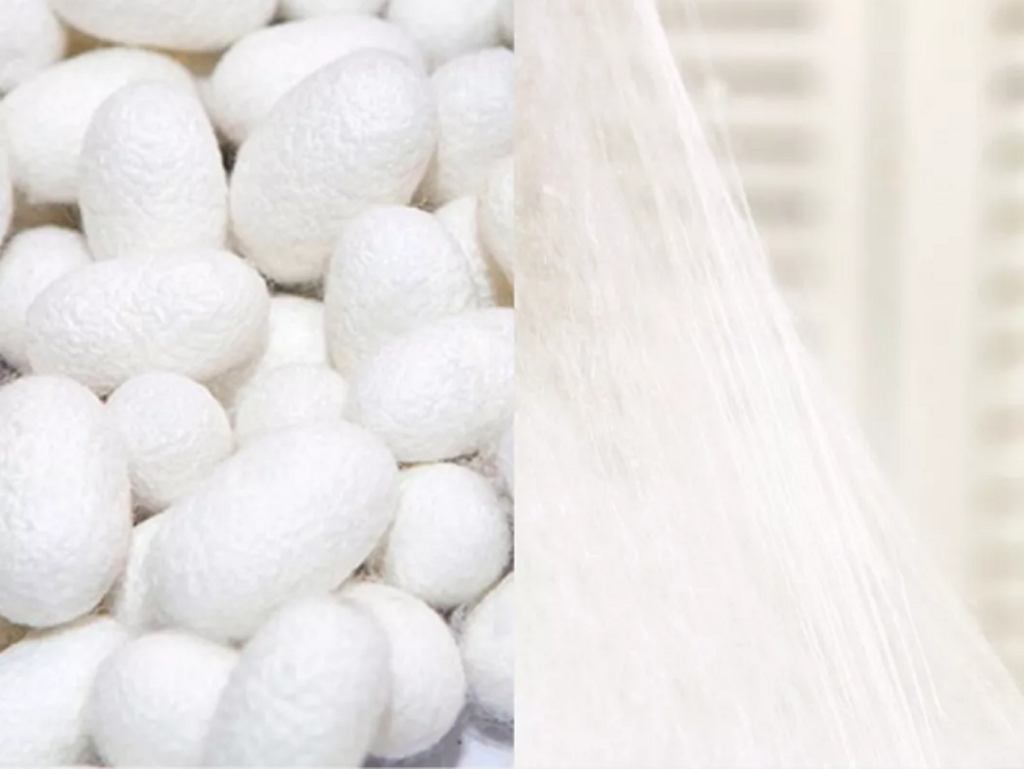
When choosing a silk quilt, many people will overlook a particularly important detail. On the washing mark of a silk […]
Read More