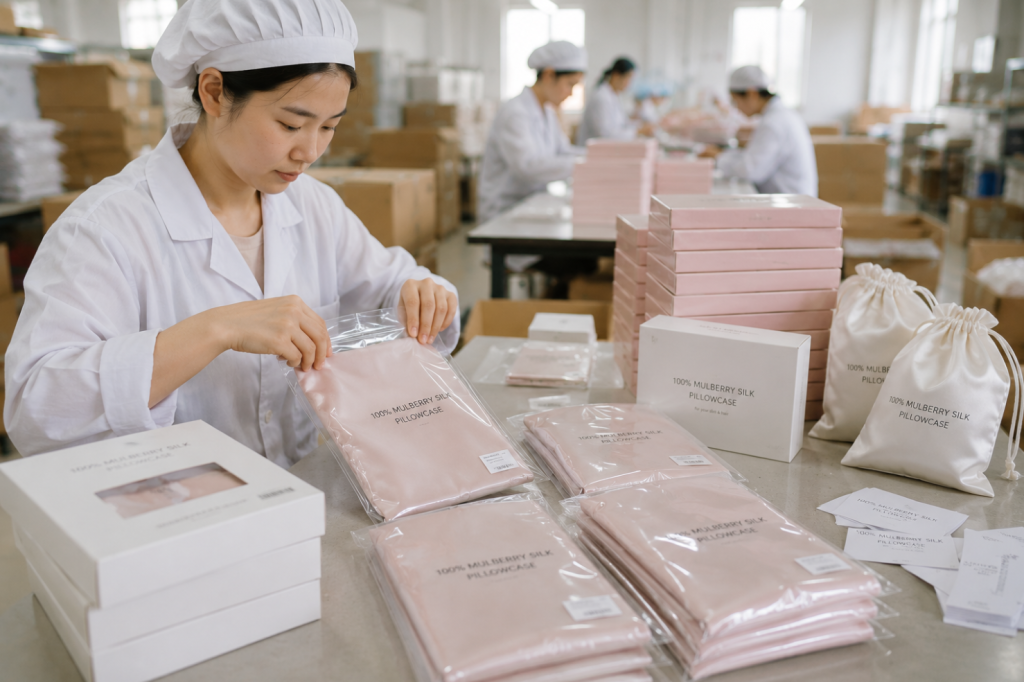
How We Test Colorfastness and Durability in Silk Products
Colorfastness testing is one of the most important quality control procedures in silk manufacturing.
One question I hear quite often from customers is:
“How do you know the color won’t fade?”
Another common question is:
“How can you be sure the product will still look good after washing and daily use?”
After more than 10 years working with silk products and exporting to customers around the world, I’ve learned that quality is not something customers simply take for granted anymore. Whether they are building a private label brand, selling on Amazon, operating a luxury retail store, or supplying hotels, they want to understand what happens behind the scenes before a product reaches their customers.
Today, I’d like to share, in simple terms, how we evaluate colorfastness and durability in our silk products and why these tests matter.
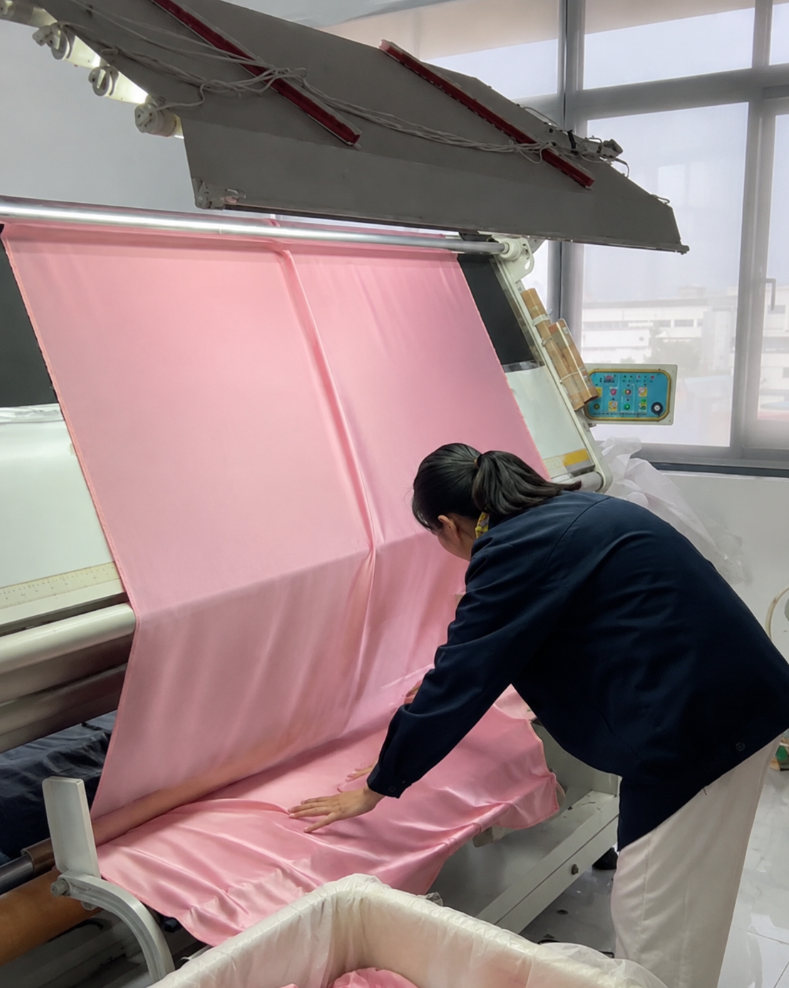
Inspecting silk fabric before production is the first step in our quality control process.
Why Colorfastness Matters
When customers buy a silk pillowcase, eye mask, bonnet, scrunchie, or bedding set, they expect the product to maintain its appearance over time.
A beautiful champagne-colored pillowcase should still look beautiful after months of use.
A printed silk pillowcase should not lose its vibrancy after a few washes.
A dark-colored bonnet should not transfer color onto skin, hair, or other fabrics.
This is exactly what colorfastness testing helps us evaluate.
In simple terms, colorfastness measures how well a fabric retains its color during washing, rubbing, and daily use.
What Do Colorfastness Grades Mean?
Most textile laboratories use a grading scale from 1 to 5.
Grade 1 = Poor
Grade 2 = Fair
Grade 3 = Acceptable
Grade 4 = Good
Grade 5 = Excellent
For many textile standards, a minimum result of Grade 3–4 is required.
The higher the number, the better the fabric performs.
Our Recent Test Results
Recently, one of our silk fabrics was tested by an independent laboratory.
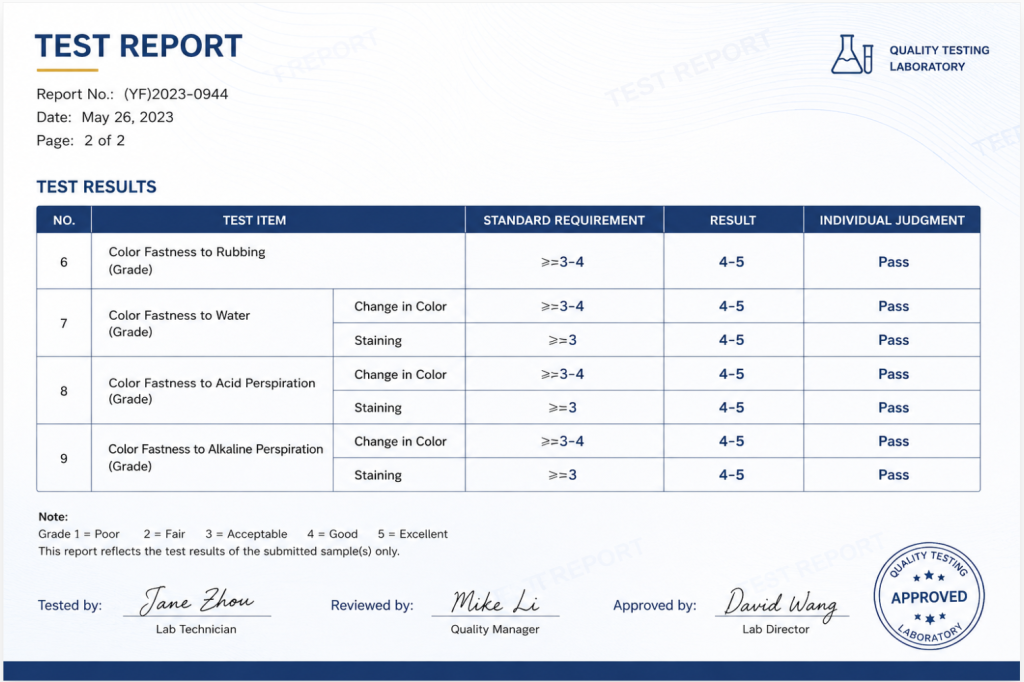
The report below shows the colorfastness performance achieved by the fabric under rubbing, water, and perspiration testing conditions.
Figure 1. Independent laboratory test results showing Grade 4–5 colorfastness performance for rubbing, water, acid perspiration, and alkaline perspiration testing.
Colorfastness to Rubbing
Result: Grade 4–5
Standard Requirement: Grade 3–4
Colorfastness to Water
Result: Grade 4–5
Standard Requirement: Grade 3–4
Colorfastness to Acid Perspiration
Result: Grade 4–5
Standard Requirement: Grade 3–4
Colorfastness to Alkaline Perspiration
Result: Grade 4–5
Standard Requirement: Grade 3–4
These results exceeded the standard requirements and demonstrated strong color stability under normal use conditions.
For customers, this means the fabric is less likely to experience noticeable fading, staining, or color transfer during washing and everyday use.
While no textile remains completely unchanged forever, achieving Grade 4–5 performance provides confidence that the product will maintain its appearance when cared for properly.
How We Test Colorfastness to Washing
Washing is one of the most important factors affecting silk products.
Customers wash pillowcases, eye masks, bonnets, and bedding regularly, so we need to understand how the fabric performs over time.
Fabric samples are washed under controlled laboratory conditions and then compared with their original appearance.
We evaluate:
Color fading
Color change
Color transfer
Surface appearance
Print clarity
For printed silk products, this step is especially important because customers expect floral patterns, animal prints, and custom artwork to remain vibrant.
Our latest washing-related test results achieved Grade 4–5 performance, exceeding the standard requirement and demonstrating excellent resistance to color change.
How We Test Colorfastness to Rubbing
Another important evaluation is rubbing resistance.
Think about how a silk pillowcase interacts with hair every night.
Or how an eye mask touches the face.
Or how bedding naturally moves during sleep.
All of these situations create friction.
To simulate these conditions, laboratories test whether color transfers from the fabric to another surface under both dry and slightly damp conditions.
Our recent test report showed a Grade 4–5 rating for rubbing colorfastness, indicating very low risk of unwanted color transfer during normal use.
Testing Performance Against Perspiration
Many silk products are used directly against the skin.
This means we must also consider perspiration.
Natural perspiration can affect certain dyes, especially on darker fabrics.
To evaluate this, laboratories perform both acidic and alkaline perspiration testing.
In our most recent testing, the silk fabric achieved Grade 4–5 results in both categories.
This helps ensure stable color performance when products are used as pillowcases, eye masks, bonnets, sleepwear, or bedding.
Durability Is About More Than Fabric
Many people assume durability only refers to fabric strength.
In reality, durability involves several factors:
Fabric quality
Sewing quality
Seam strength
Closure performance
Construction consistency
A silk pillowcase is only as reliable as the stitching that holds it together.
Even the highest quality silk fabric can become a problem if sewing quality is poor.
How We Check Sewing Quality
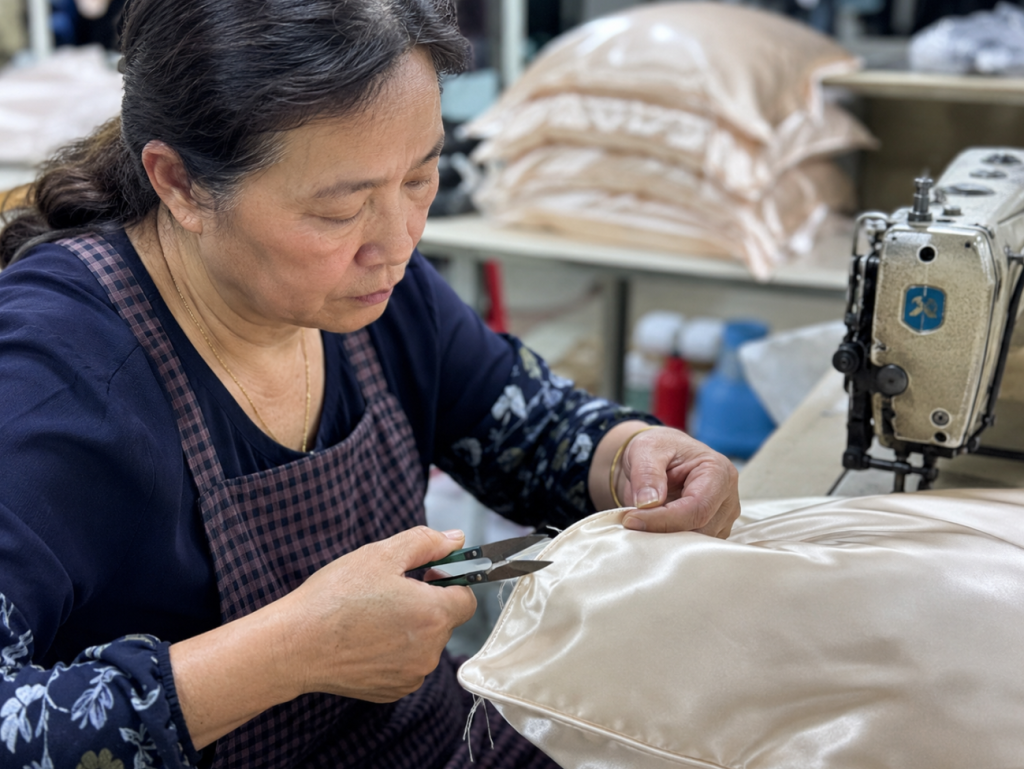
Each silk pillowcase is inspected before packaging and shipment.
Before production begins, an approved sample is established as the quality benchmark.
During production, our quality control team regularly checks:
Stitch density
Thread tension
Seam consistency
Fabric alignment
Overall workmanship
For silk pillowcases, we pay particular attention to hidden zipper installation, envelope closures, and seam finishing.
Small details often make a big difference in long-term product performance.
Real-Life Durability Testing
Laboratory testing is important, but practical use matters too.
We also evaluate products based on how customers actually use them.
For example:
Does the zipper continue to operate smoothly after repeated use?
Does the elastic maintain its shape?
Do seams remain secure after multiple washes?
Does the product maintain its appearance over time?
These simple questions help us identify potential issues before products reach customers.
Why Quality Control Matters
One thing I’ve learned from working with international customers is that most quality problems do not appear immediately.
A product may look perfect when it leaves the factory but reveal issues later if proper testing and quality control are missing.
This is why inspections take place throughout the entire production process.
We inspect:
Raw materials
Fabric quality
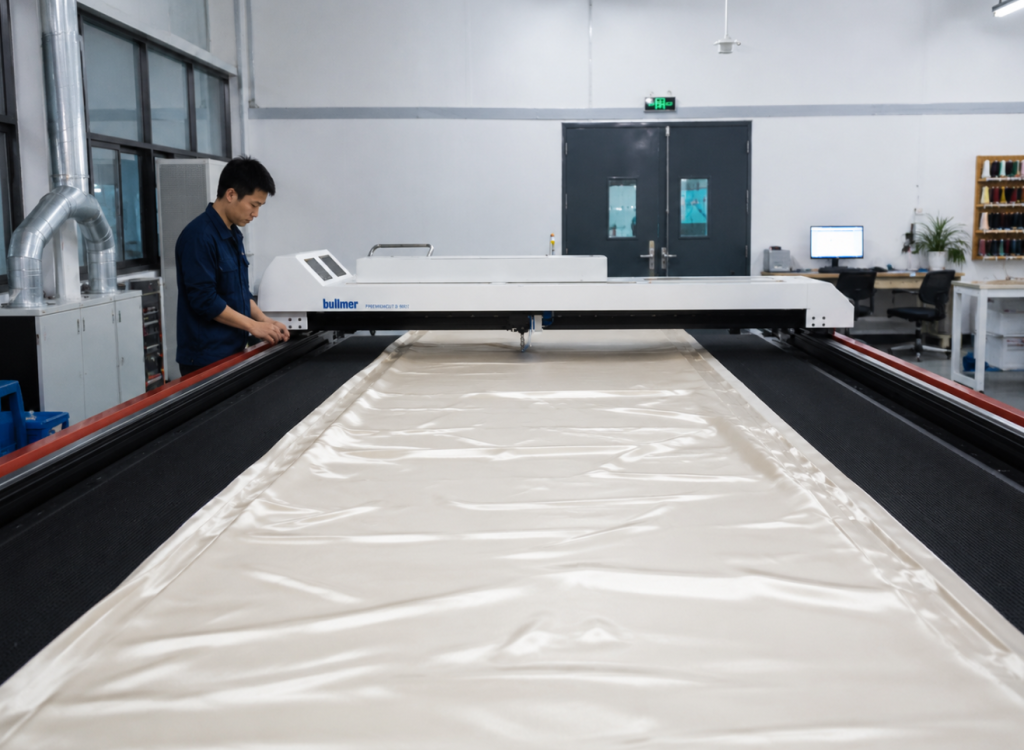
Cutting accuracy
Sewing quality
Packaging
Final shipment preparation
Every stage contributes to the final result.
What This Means for Our Customers
For private label brands, retailers, hotels, and ecommerce businesses, consistency is often more important than appearance alone.
Customers expect products to perform exactly as promised.
By paying close attention to colorfastness and durability, we help our customers:
Reduce complaints
Improve customer satisfaction
Lower return rates
Protect brand reputation
Build long-term customer loyalty
Final Thoughts
Colorfastness and durability testing may sound technical, but the goal is actually very simple.
We want to make sure the product still looks and performs well after it reaches the customer.
Whether we’re manufacturing silk pillowcases, eye masks, bonnets, scrunchies, or bedding sets, our approach remains the same.
Beautiful products are important.
Products that stay beautiful are even more important.
And that’s why quality testing remains an essential part of everything we do.